What The Vine Doesn't Say
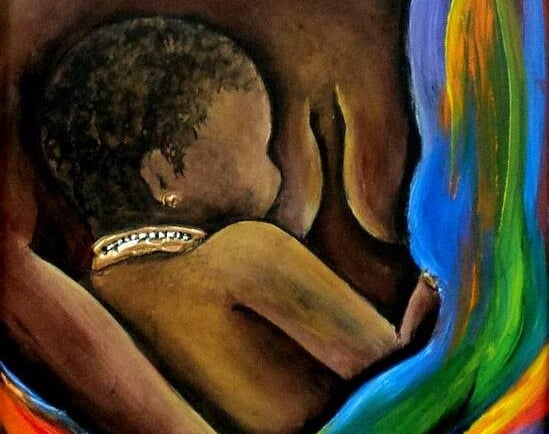
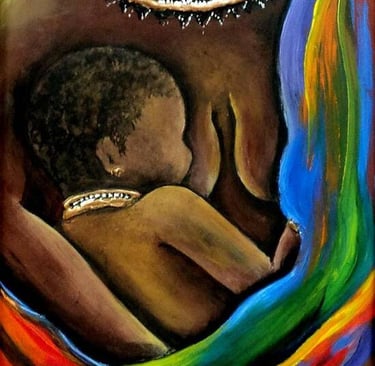
John joined us for a private ceremony and, like many others before him, felt the stirring of a primal feminine energy. The experience inspired him to write an article which beautifully articulated the nature of this energy as expressed in the primordial relationship between Mother and Child. Thank you John for taking the time to abridge your longer essay to be published here. Full Article at: https://thematriarchalman.substack.com/ Image by Marietjie Henning
Begin with two questions. Answer them privately, out on a hiking trail if you like, because no one is watching, and because the honest answers are more interesting than they first appear.
When was the last time you gave something with zero expectation of return?
Not zero expectation of payment. That is too easy. Zero means zero: no favor quietly banked, no thanks anticipated, no story told at dinner, no reputation for generosity, not even the private satisfaction of being the kind of person who does such things. The act, complete in itself, released.
Now the second question, which is harder. When was the last time you received something fully? Received it without feeling, somewhere in the chest, that a small debt had opened. Help carrying a load. A compliment. A meal someone would not let you pay for. When did you last let one of these simply land, the way a field takes sunlight, without reaching for your wallet in any of the hundred forms that reaching takes: the deflection, the joke, the instant offer to return the favor, the faint unease that will not settle until the scales are level again.
If both questions were hard, nothing is wrong with you. You were trained. Most of us carry a ledger, and we have carried it so long it feels like a spine. It runs quietly under marriages, friendships, and holidays, converting every kindness given into a receivable and every kindness received into a bill. It is why gratitude, which ought to be among the warmest human feelings, so often arrives contaminated with obligation.
Now step off the trail for a moment and look down, because the forest you walk through runs on different accounting. Beneath your boots, fungal networks thread through the soil, moving water and nutrients between root systems, connecting trees that will never meet above ground. Ecologists still argue about how to describe what passes through those threads, and some of them, tellingly, reach for the language of markets and trade. But no invoice has ever been found in the soil. The leaf litter feeds the fungus, the fungus feeds the root, the tree feeds the deer, and the deer, in time, feeds the ground. Nothing in the system demands an equal return from the thing it feeds. Everything gives forward.
And above it all, the original giver. The sun pours out its light in one direction, endlessly, and cannot be repaid, being too far away to receive anything back. The earth does not send the light back. The earth does something better: it receives the light and turns it into forests, wheat, mushrooms, rivers teeming with fish, and, in time, into the hands that will one day give again. Every green thing you have ever seen is the earth's answer to a gift it will never return. Notice that receiving, here, is not passivity and not debt. It is the creative half of the gift, the half that completes it. Try to imagine repaying the sun.
Picture a man on a hillside with a mirror, flashing light back at a star. Picture him at the shore, pouring a cup of water into the ocean to settle his account with the sea. The absurdity is the lesson. Some relationships are simply too large for bookkeeping, and the oldest ones, the ones that made you, all are. Before you could do anything at all, someone fed you, warmed you, and handed you words one at a time until a mind assembled itself inside you. None of it could be paid back. You were not exchanged into existence. You were given.
Two thousand years ago, Marcus Aurelius sorted givers into three kinds: the one who does a favor and openly expects repayment; the one who expects nothing aloud but keeps a private note of what he is owed; and a third kind. "A vine does not say, 'I have borne grapes, now pay me.' It simply bears fruit and seeks nothing in return." The second giver is most of us on our best behavior: the quiet accountant whose invoice stays invisible, sometimes even to himself, until it comes due as resentment. The recipient always feels that invoice eventually, without being able to name it. That feeling is the flinch you located in yourself at the top of this page.
So, a small experiment for your week. Give fully or receive fully, once, with no strings in either direction. Do a good thing and tell no one, not even the version of yourself that collects evidence of being good. Or let something given to you all the way in, without reaching for your wallet. Then pay attention to what rises: the itch, the inner accountant's objection, the strange lightness underneath. That discomfort is not a warning. It is the sound of old training meeting open water.
The forest never learned to keep books, and it has been running, generously, for four hundred million years.
This essay is adapted from a longer piece at The Matriarchal Man, a publication about masculinity rebuilt around care: what it means to give without keeping score, and to receive without flinching. This project had been marinating for over a year, but it was after a retreat experience with Oliver at After The Rains that things fell into place for life to be breathed into it. The full essay and its recent follow up can be found here: https:// thematriarchalman.substack.com/